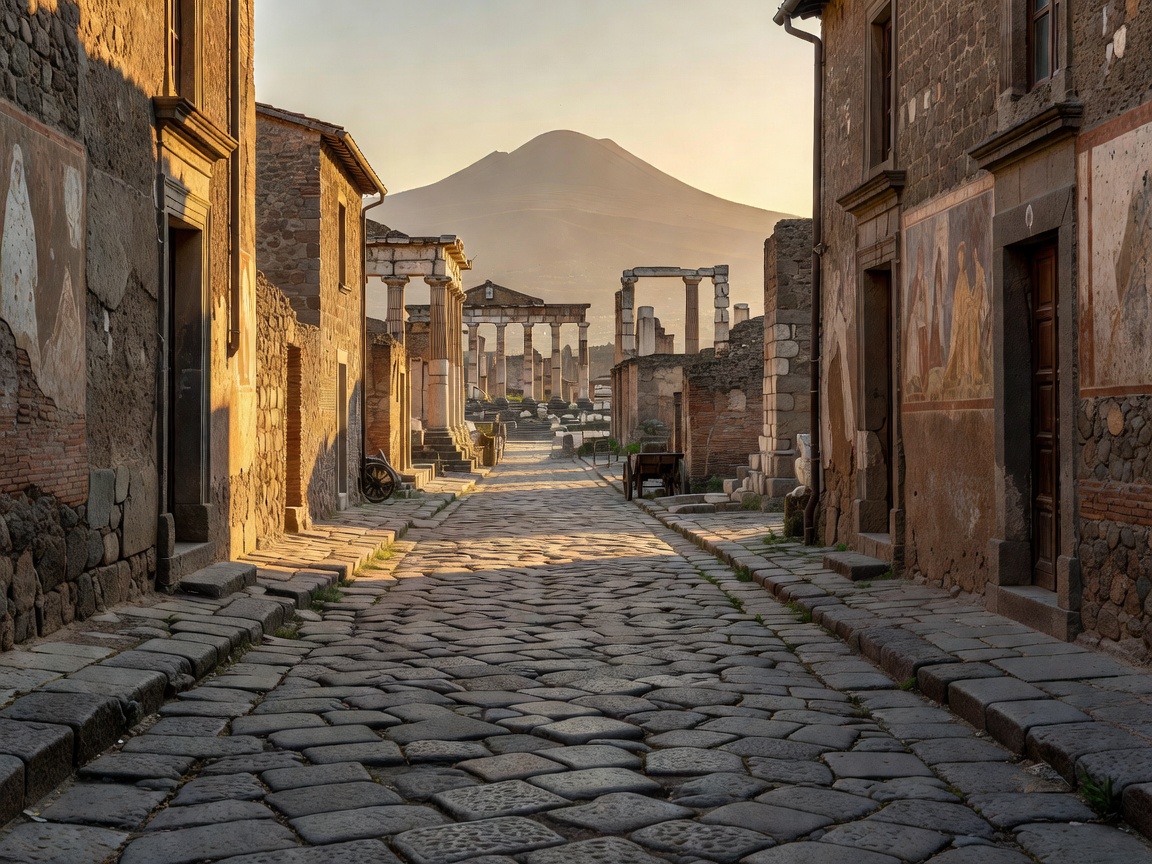
1. The Cataclysm of 79 AD and Volcanological Dynamics
The destruction of Pompeii occurred in two primary phases: an initial Plinian phase characterized by a high-altitude eruptive column that deposited pumice lapilli and caused roof collapses across the city, followed by a Peléan phase of lethal pyroclastic density currents (PDCs).
These superheated surges (temperatures exceeding 300°C) swept through the city at speeds up to 100 km/h, causing instant thermal shock and asphyxiation for remaining inhabitants while enveloping their bodies in compacted, fine ash strata.
The Fiorelli Plaster Casting Technique
In 1863, archaeologist Giuseppe Fiorelli observed that decomposed organic matter left distinct hollow voids within the hardened ash layers. By injecting liquid plaster of Paris into these cavities and carefully removing the surrounding ash, he created forensic casts capturing the final postures, clothing folds, and facial expressions of the victims.
2. Conservation Architecture and The Great Pompeii Project
Exposure to open air, seismic activity, rainwater pooling, and over 3.5 million annual visitors created severe degradation risks, culminating in the 2010 collapse of the Schola Armaturarum. In response, the Italian government and the European Union launched the Great Pompeii Project (€105 million):
- Hydrogeological Mitigation: Stabilizing the 2.6-kilometer unexcavated scarp boundary separating excavated ruins from earthen hills to prevent water-induced landslides.
- Roof and Fresco Consolidation: Replacing unstable post-war concrete roofs with lightweight timber and steel trusses while applying nanolime consolidants to fragile Third and Fourth Style Roman frescoes.
- X-ray CT Scanning of Casts: Modern non-destructive analysis using 16-slice computed tomography to study bone structure, dental pathology, and age demographics within the Fiorelli casts without damaging the outer plaster matrix.
3. Comparative Matrix: Pompeii vs. Herculaneum
| Criteria | Pompeii Archaeological Park | Herculaneum (Ercolano) |
|---|---|---|
| Preservation Mechanism | Pumice fallout followed by pyroclastic surge | Deep pyroclastic flows (up to 20m depth) |
| Organic Matter Preservation | Cavity impressions (casts); rare carbonization | Exceptional carbonized wood, roofs, and food remains |
| Scale of Excavation | Sprawling commercial city (44 hectares exposed) | Compact seaside resort town (approx. 4.5 hectares exposed) |
| Human Remains Display | Plaster casts distributed in situ and in Antiquarium | Skeletal arrays in the beachside boat houses (Fornici) |
4. Ethical Dimensions of Disaster Display
Displaying human death casts creates complex ethical and philosophical questions. While Pompeii casts are technically plaster molds surrounding authentic human skeletal remains, they are often perceived as statues rather than human corpses.
Archaeological management has increasingly prioritized dignity: positioning casts behind protective museum glass within historical contexts (such as the Garden of the Fugitives or the Macellum) and prohibiting sensationalized interactive exhibitions.
5. Field Evaluation: Conservation Realities
Direct, unmediated insight into ancient urban planning, domestic engineering, and catastrophe volcanology; supported by continuous non-invasive excavations in Regio V.
Constant exposure to acidic rain, weed growth between basalt paving stones, and masonry wear caused by high summer tourist densities.
6. Visitor Field Protocol
Visitors must stay on designated stone pathways, avoid leaning on delicate ancient masonry or frescoed plaster, refrain from using camera flashes inside domus rooms, and respect active excavation zones cordoned off by official archaeological teams.