1. Conservation Science of Fragile Evidence
Unlike conventional historical museums displaying curated fine art, the Auschwitz-Birkenau State Museum preserves forensic evidence of industrial genocide. The materials present unprecedented conservation challenges:
- Leather and Footwear: Tens of thousands of shoes confiscated from deportees suffer from acid deterioration, desiccated adhesives, and bacterial decay, requiring controlled microclimate vaults and customized non-invasive chemical stabilization.
- Textiles and Suitcases: Painted cardboard, pressed fiber suitcases, and hair textiles require strict relative humidity thresholds (45–55%) and lux levels restricted to prevent light-induced fading.
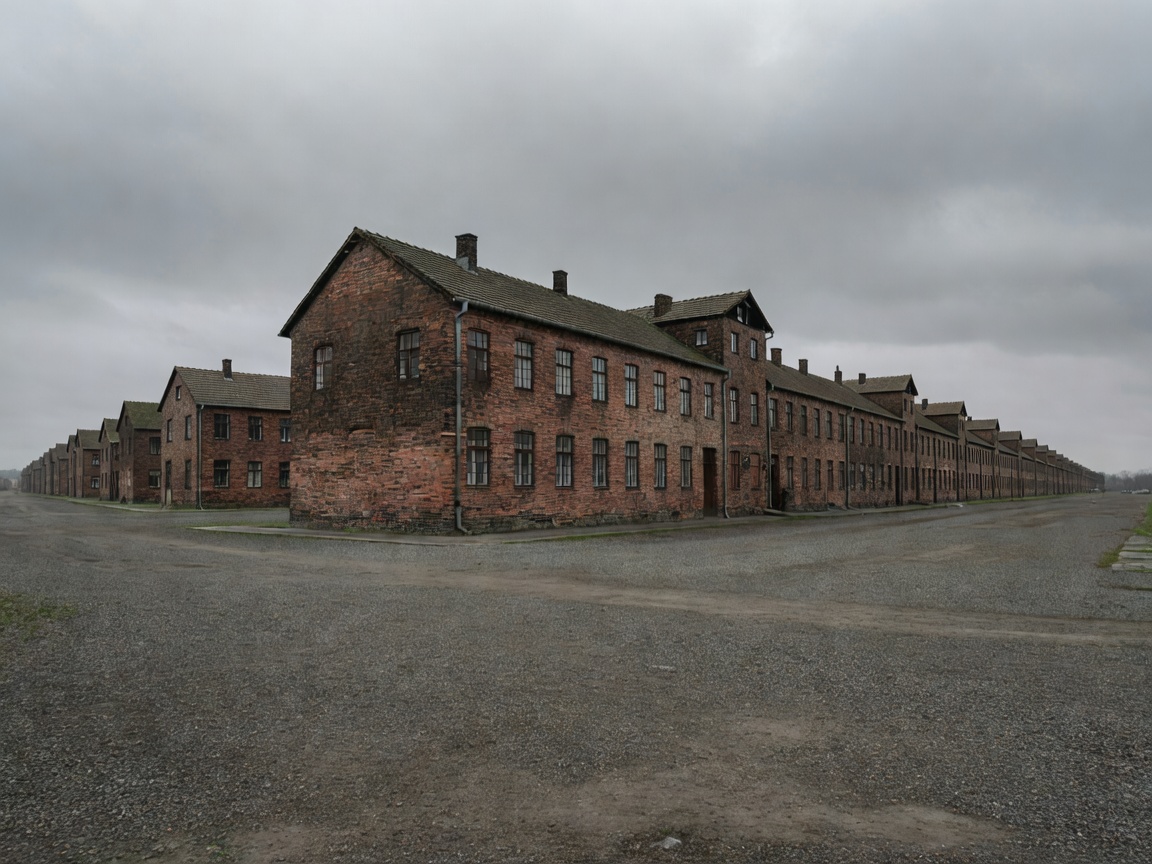
- Brick Barracks of Birkenau (Auschwitz II): Constructed rapidly during wartime using low-quality mortar and unbaked brick foundations, 45 masonry barracks in the BI sector are stabilized through extensive micropiling and geotechnical drainage systems.
The Auschwitz-Birkenau Foundation Perpetual Fund
Established in 2009, the Foundation manages an international endowment fund designed to finance the Master Plan for Preservation in perpetuity. It guarantees that authentic structures, ruins of the gas chambers and crematoria, and personal belongings remain preserved without cosmetic reconstruction.
2. Comparative Overview: Auschwitz I vs. Auschwitz II-Birkenau
| Parameters | Auschwitz I (Main Camp) | Auschwitz II (Birkenau) |
|---|---|---|
| Original Architecture | Pre-war Polish military brick barracks | Custom-built wooden & brick mass-extermination complex |
| Exhibition Focus | Forensic evidence, institutional records, artifact cases | Monumental landscape, railway unloading ramp, ruins of gas chambers |
| Atmospheric Scale | Enclosed, concentrated, museum-style interior corridors | Vast 175-hectare outdoor expanse, exposed to weather elements |
| Key Conservation Challenge | Mass human footfall wear on 80-year-old staircases and floors | Groundwater saturation, frost heave on ruins, rotting timber barracks |
3. Thanatourism Dynamics: Education vs. Inappropriate Behavior
As visitor numbers grew over the past two decades, museum authorities encountered recurring behavioral issues that catalyzed a worldwide debate on visitor etiquette at atrocity sites.
Key ethical and operational friction points include:
- Disrespectful Photography: Posing on the railway tracks or taking selfies inside execution courtyards (such as the Death Wall in Block 11) contradicts the solemnity of the cemetery grounds.
- Crowd Saturation: High visitor density during peak months leads to physical wear on narrow stairwells in Auschwitz I, prompting the implementation of mandatory timed-entry educator-led tours.
- Commercialization Boundaries: The museum maintains a strict non-profit stance, banning commercial filming, unauthorized concessions, and advertising within the commemorative protection zone.
4. Structural and Ethical Evaluation
Irreplaceable empirical counter-evidence against historical denialism; high educational immersion for younger generations through verified historical pedagogy.
Severe emotional fatigue for museum guides; heavy infrastructure wear requiring tens of millions of euros in recurring maintenance to prevent structural collapse.
5. Regulations for Visiting
Visitors are required to observe strict behavioral protocols: quiet demeanor, appropriate attire covering shoulders and knees, maximum bag sizes of 30x20x10 cm, complete ban on photography inside certain buildings (e.g., Room 5 in Block 4), and respectful silence throughout Birkenau's memorial sectors.